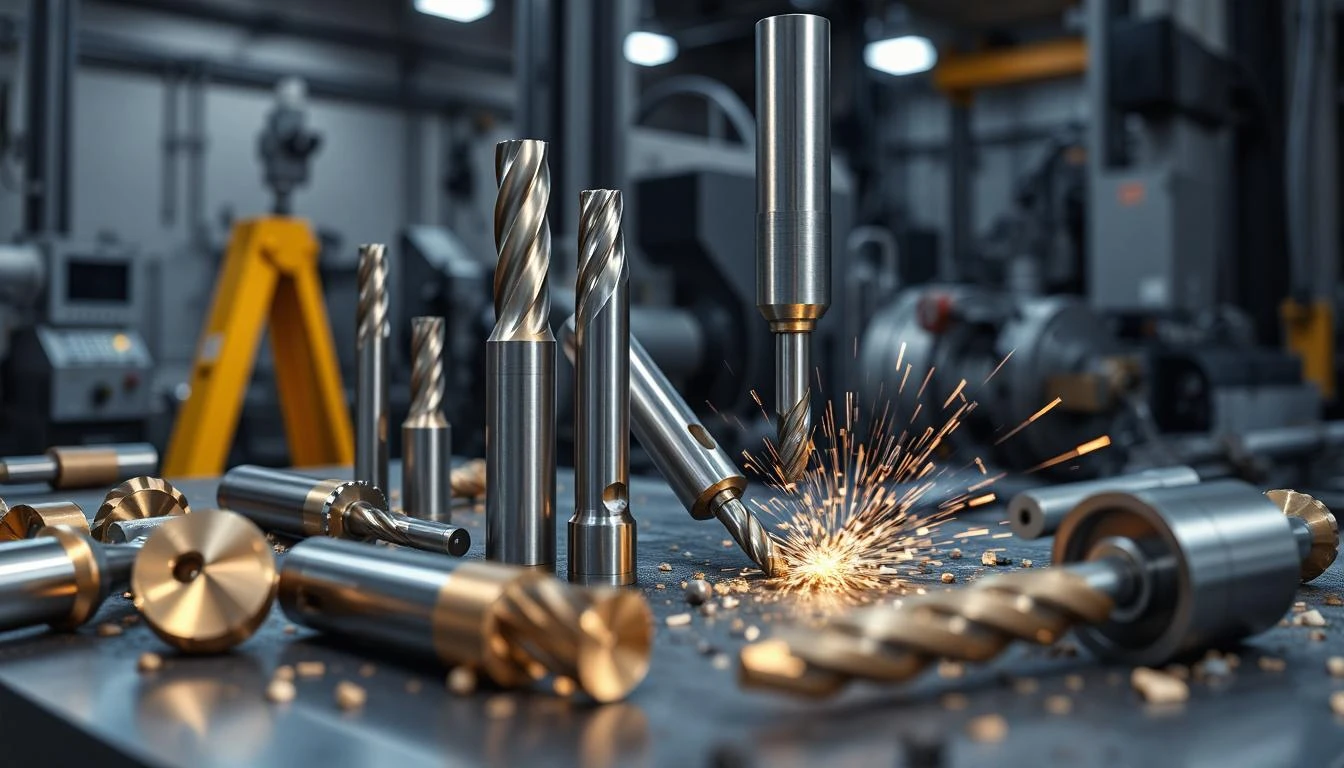
Precision Industrial Tools Guide
In modern global manufacturing, precision is no longer a luxury, it is the invisible foundation that holds every successful production system together. From automotive assembly lines to aerospace engineering floors, everything depends on accuracy that can be measured in microns rather than millimeters. When industries scale up, the smallest deviation can create the biggest consequences.
This is where precision industrial tools quietly take control behind the scenes. These tools are not just equipment; they are the silent decision-makers of manufacturing quality, ensuring every cut, measurement, and assembly follows exact engineering intent without compromise.
Introduction to precision industrial tools
The industrial world is shifting toward extreme accuracy, where even the slightest misalignment can disrupt entire production chains. In this environment, precision becomes a language of trust between machines, engineers, and final products.
Modern factories increasingly depend on precision industrial tools as the backbone of manufacturing automation systems and high-accuracy production environments, where consistency is not optional but mandatory for global competitiveness.
Role of precision tools in manufacturing
Manufacturing today is driven by repeatability, and that is exactly where precision tools dominate. They control shaping, cutting, alignment, and assembly with engineered consistency. In many advanced facilities, industrial measurement tools are integrated directly into production lines to ensure every component meets strict dimensional requirements without manual recalibration delays.
“Precision tools are not supporting actors in manufacturing; they are the scriptwriters of production accuracy,” says Jonathan Keller, Senior Manufacturing Engineer at TechCore Systems.
Benefits of accurate machining processes
Accurate machining reduces waste, increases product lifespan, and improves operational efficiency. It also minimizes human intervention, allowing systems to operate with higher autonomy.
Industries using CNC machining tools combined with precision calibration systems often report faster turnaround times and significantly lower defect rates.
Industries that rely on precision tools
From semiconductor fabrication to medical device engineering, precision tools are deeply embedded across industries. Aerospace manufacturing, in particular, relies heavily on ultra-tight tolerances to ensure flight safety.
Automotive innovation, renewable energy systems, and robotics manufacturing all depend on industrial metrology standards to maintain reliability at scale.
Types Of precision industrial tools
Industrial ecosystems are built on layered tool systems, each designed for a specific stage of production. Understanding these categories helps reveal how precision truly shapes modern manufacturing.
Precision tools are no longer standalone devices, they are interconnected systems working together to achieve seamless production flow and accuracy control.
Cutting and shaping tools
Cutting and shaping tools define how raw materials transform into functional components. Technologies like laser cutting systems and CNC-based shaping machines allow manufacturers to create complex geometries with extreme accuracy.
These systems are essential for industries requiring fine detailing and structural consistency, especially in automotive and aerospace sectors.
Measuring and inspection instruments
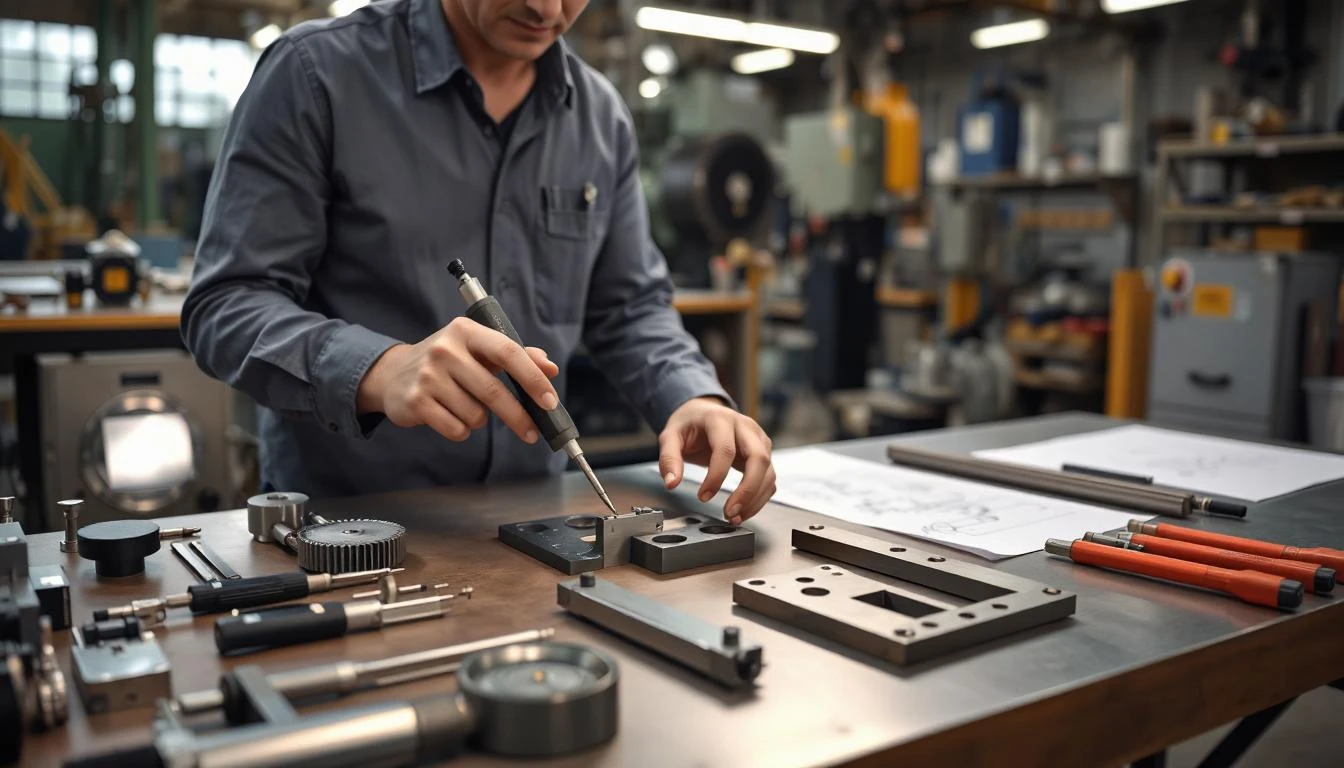
Measurement defines truth in manufacturing. Without it, precision becomes guesswork. This is why industrial measurement tools play a critical role in verifying every dimension during production. Advanced inspection systems using metrology instruments ensure that deviations are detected early, preventing costly production errors.
“Measurement is the foundation of trust in engineering systems,” explains Dr. Elena Moritz, Industrial Metrology Specialist at EuroTech Labs.
Drilling and finishing equipment
Drilling systems today operate with digitally controlled precision, allowing exact depth and alignment control. When combined with finishing tools, they ensure both structural strength and surface refinement.
Calibration techniques such as micrometer calibration help maintain accuracy across repeated operations, especially in high-volume manufacturing environments.
Choosing And Maintaining precision industrial tools
Selecting industrial tools is not just about performance specs, it is about long-term operational stability. Every decision impacts production efficiency, cost structure, and product reliability.
Factories that invest in proper tool selection strategies often outperform competitors in both speed and quality output.
Factors to consider before purchasing
Choosing the right tools requires evaluating durability, compatibility, and precision tolerance levels. Many engineers also consider how to choose industrial measurement tools for manufacturing accuracy before making procurement decisions.
Ignoring these factors often leads to frequent recalibration cycles and increased downtime in production lines.
Proper storage and handling practices
Precision tools are sensitive instruments that require controlled environments. Humidity, dust, and improper handling can gradually reduce their accuracy.
Facilities that implement structured handling systems for industrial measurement tools maintain significantly higher operational consistency.
Maintenance for long term performance
Maintenance is the hidden backbone of precision systems. Without it, even the most advanced tools degrade over time.
Routine calibration, cleaning, and system checks ensure that precision industrial tools remain reliable and consistent throughout their operational lifespan.
Master Industrial Efficiency With precision industrial tools Knowledge
True efficiency in manufacturing does not come from speed alone but from controlled precision across every process layer. Companies that understand this principle consistently lead global production markets. Here, optimization is not just technical, it is strategic. Every improvement in accuracy translates directly into reduced waste, improved safety, and stronger product reputation.
“The future of manufacturing belongs to those who master precision, not just production volume,” says Robert Hayes, Global Industrial Consultant at MechSys Advisory. When applied correctly, precision industrial tools combined with CNC machining tools and industrial metrology standards create a production ecosystem that is both stable and scalable. This is where efficiency becomes predictable rather than accidental.