Industrial Cutting Tools For Precision Work
Understanding Industrial Cutting Tools
In today’s manufacturing landscape, precision is no longer a competitive advantage, it is a necessity. Whether producing aerospace components, automotive parts, medical devices, or custom-engineered products, companies must maintain exceptional accuracy while meeting demanding production schedules. The ability to cut materials efficiently and consistently often determines the difference between profitability and costly inefficiencies.
As industries continue to adopt smarter production methods, industrial cutting tools have become one of the most critical elements in modern manufacturing. These tools help businesses achieve tighter tolerances, reduce material waste, improve product quality, and support the growing demand for precision-driven production across global markets. Before exploring specific tool types and applications, it is important to understand why cutting precision matters so deeply in industrial environments. Even the smallest deviation in measurement can lead to misaligned assemblies, product failure, or increased operational costs.
As manufacturing expert Dr. Michael Harrington once stated, “Precision machining is not about making things smaller, it is about making things exact, repeatable, and dependable at scale.”
Importance of precision in industrial cutting
Precision in industrial cutting directly influences product integrity and production efficiency. When tolerances are tightly controlled, manufacturers can ensure that each component fits seamlessly into larger systems without requiring additional adjustments. This reduces rework, minimizes waste, and improves overall workflow consistency.
To achieve this level of accuracy, many facilities rely on precision cutting equipment designed to maintain stability even under high-speed or high-load conditions. These systems are essential in industries where even microscopic errors can have serious consequences.
Common types of cutting tools
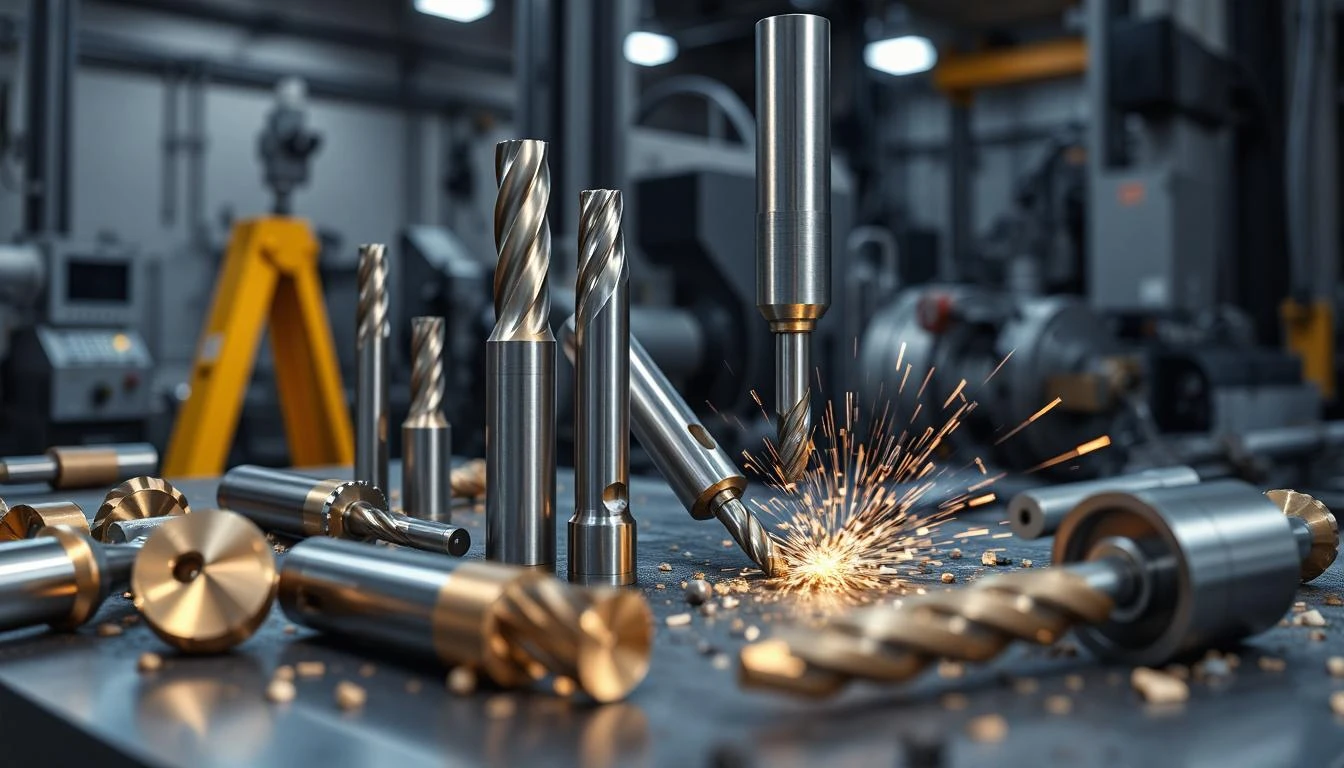
Industrial environments use a wide range of cutting tools, each designed for specific materials and applications. These include carbide inserts, milling cutters, drill bits, turning tools, and advanced CNC-compatible cutting systems.
Modern advancements have also introduced laser-based and waterjet technologies, allowing manufacturers to cut complex shapes with minimal thermal distortion. These innovations have expanded what is possible in terms of design and production flexibility.
Applications across different industries
The versatility of industrial cutting tools allows them to be used across multiple sectors, including automotive manufacturing, aerospace engineering, construction, electronics, and heavy machinery production.
Each industry demands different levels of precision, speed, and durability, which is why tool selection must always align with operational requirements and material characteristics.
Key Features Of Precision Cutting Tools
Before selecting any cutting solution, manufacturers must evaluate the core features that define performance quality. These features directly influence durability, efficiency, and long-term production stability.
Understanding these characteristics also helps businesses avoid unnecessary downtime and improve cost efficiency across manufacturing cycles.
Material quality and durability
The strength and composition of cutting tools determine how well they perform under pressure. Materials such as carbide, ceramic composites, and polycrystalline diamond are widely used due to their resistance to heat and wear.
In addition, coatings like titanium nitride significantly enhance tool lifespan and reduce friction during high-speed operations. A manufacturing consultant, James Caldwell, once noted, “A tool’s material is not just its structure, it is its endurance under industrial reality.”
Cutting accuracy and performance
Accuracy is the core of every machining process. Even slight deviations can impact assembly quality and product reliability. That is why manufacturers prioritize tools that maintain sharpness and stability over long production runs.
High-performance precision cutting equipment ensures consistent output even in demanding environments, making it essential for industries requiring strict tolerances and repeatable results.
Tool maintenance and lifespan
Maintenance plays a vital role in extending tool life and preserving cutting quality. Regular inspection, proper cleaning, and controlled usage conditions help prevent premature wear.
By implementing structured maintenance routines, companies can significantly reduce operational costs while ensuring uninterrupted production cycles.
Best Practices For Precision Cutting Operations
Efficient cutting operations require more than just advanced tools, they demand strategic planning and disciplined execution. The way tools are selected, used, and maintained directly affects production outcomes.
Selecting the right tool for each task
Choosing the correct cutting tool depends on material type, hardness, and required finishing quality. Misalignment between tool and task can lead to poor performance and increased wear.
Many manufacturers researching best industrial cutting tools for manufacturing efficiency discover that proper tool matching dramatically improves both speed and accuracy.
Improving safety during cutting processes
Safety remains a critical component in industrial environments. Proper protective equipment, machine guarding, and operator training are essential to prevent accidents and maintain workplace stability.
A safe working environment not only protects workers but also ensures smoother production flow without unexpected disruptions.
Maximizing efficiency and productivity
Efficiency is achieved when cutting speed, tool durability, and machine capability are perfectly balanced. Automation and digital monitoring systems now play a major role in optimizing performance.
With the integration of smart manufacturing systems, production facilities can reduce downtime and enhance output consistency across multiple operations.
Achieve Better Results With Precision Cutting Tools
As industries continue to evolve, the demand for higher precision, faster production, and better material utilization becomes more intense. This is where industrial cutting tools prove their long-term value by enabling manufacturers to meet modern production standards without compromising quality.
From material selection to operational strategy, every detail contributes to final output performance. Companies that invest in advanced cutting solutions often experience significant improvements in efficiency, product consistency, and cost control.
According to engineering specialist Robert Ellison, “The future of manufacturing belongs to those who understand that precision is not an option, it is the baseline of industrial success.”